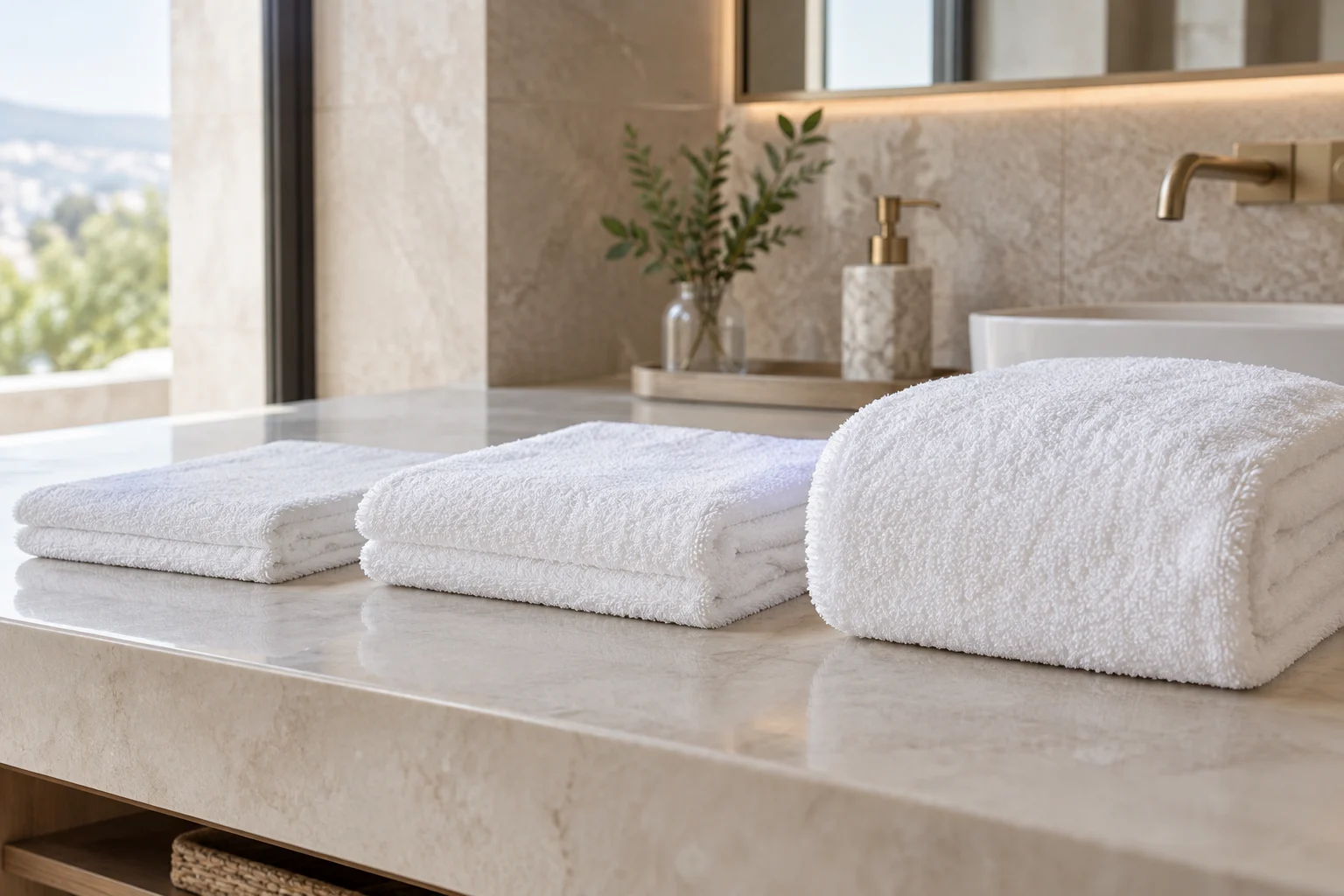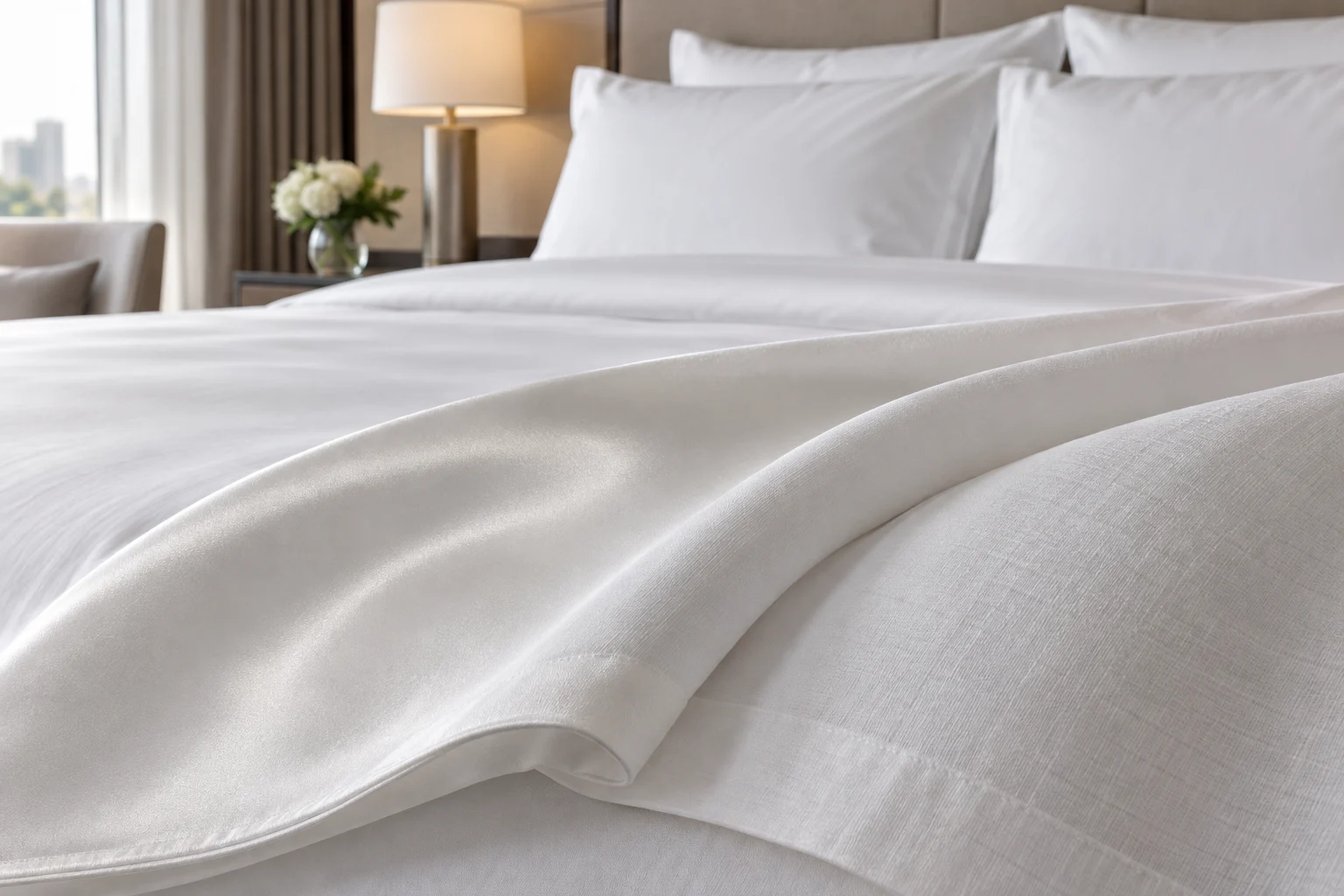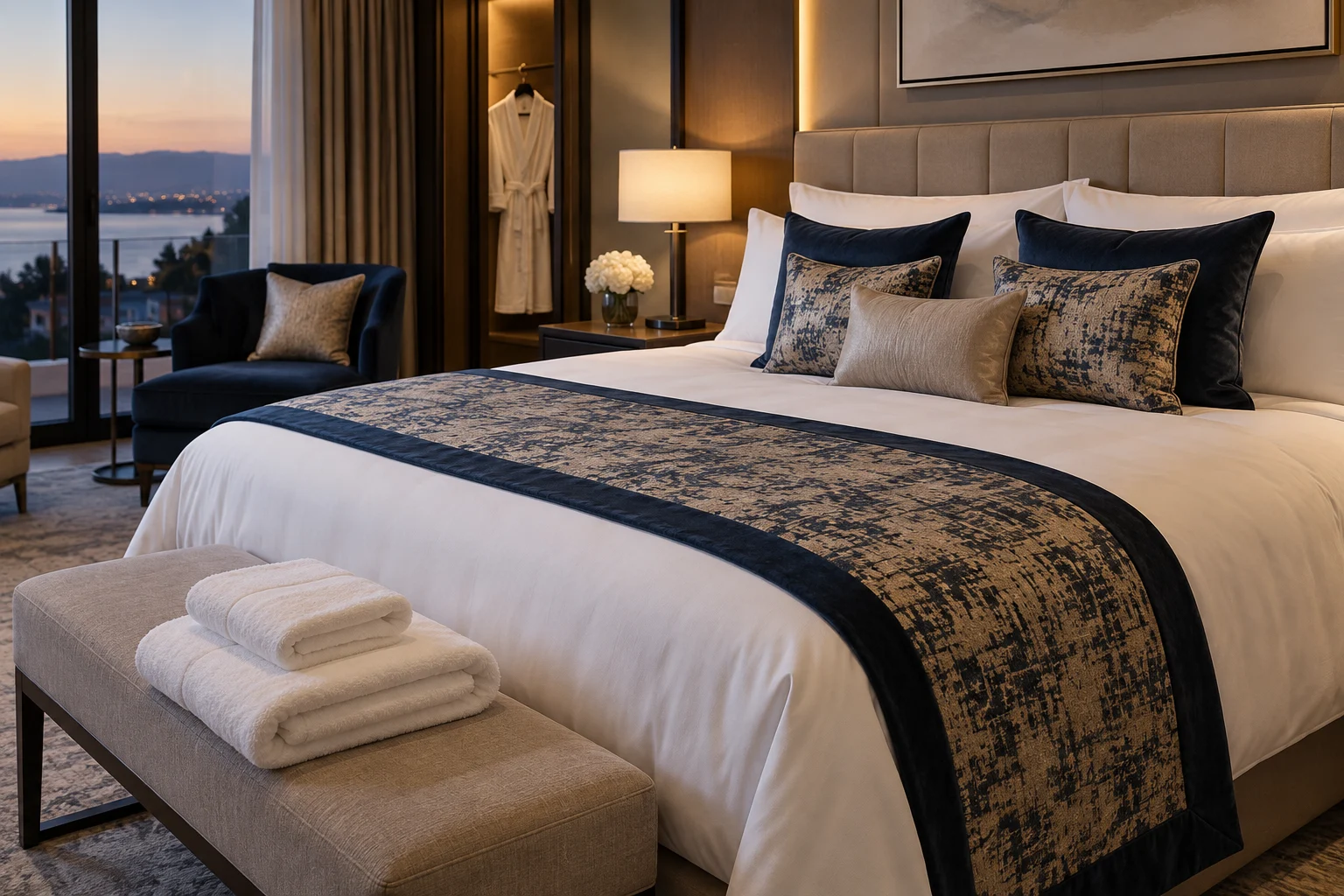
A coordinated textile program is more than matching colours. It connects the brand concept with housekeeping practicality, purchasing control and the sensory experience of the room.
Start with the operating brief
Define hotel category, room types, climate, laundry method, target replacement cycle and opening schedule. Record every mattress, duvet and pillow dimension before sampling. These decisions establish the performance baseline for sheets, inserts, towels, robes and protective products.
Create a clear visual hierarchy
Keep frequently replaced core linen consistent across the property where possible. Add personality through bed runners, cushions, piping, woven patterns or embroidery. A controlled palette makes rooms feel intentional while allowing decorative pieces to vary between suites or concepts.
Branding should be selective. A discreet logo on a bathrobe, towel or amenity package can support identity without making the room feel overdesigned.
Reduce unnecessary complexity
Fewer well-defined specifications make training, stock control and reordering easier. Bespoke items can still be introduced where they have the greatest visual impact.
- Standardise core sizes and constructions across similar room types.
- Use clear product codes and sewn-in labels for identification.
- Confirm compatible whites, trims and colour tolerances in one sample set.
- Plan opening stock, replenishment and lead times together.
Approve the room as a complete system
Review final samples in a mock-up room under actual lighting. Dress the bed, place every towel and check how colours, scale and texture work together. Then wash representative samples before bulk approval so appearance and operation are validated at the same time.