A mattress protector sits out of sight, but it has an important operational role. It helps preserve a major room investment, supports hygiene procedures and can add a light layer of comfort. The correct construction depends on the property’s priorities.
Choose the protection level
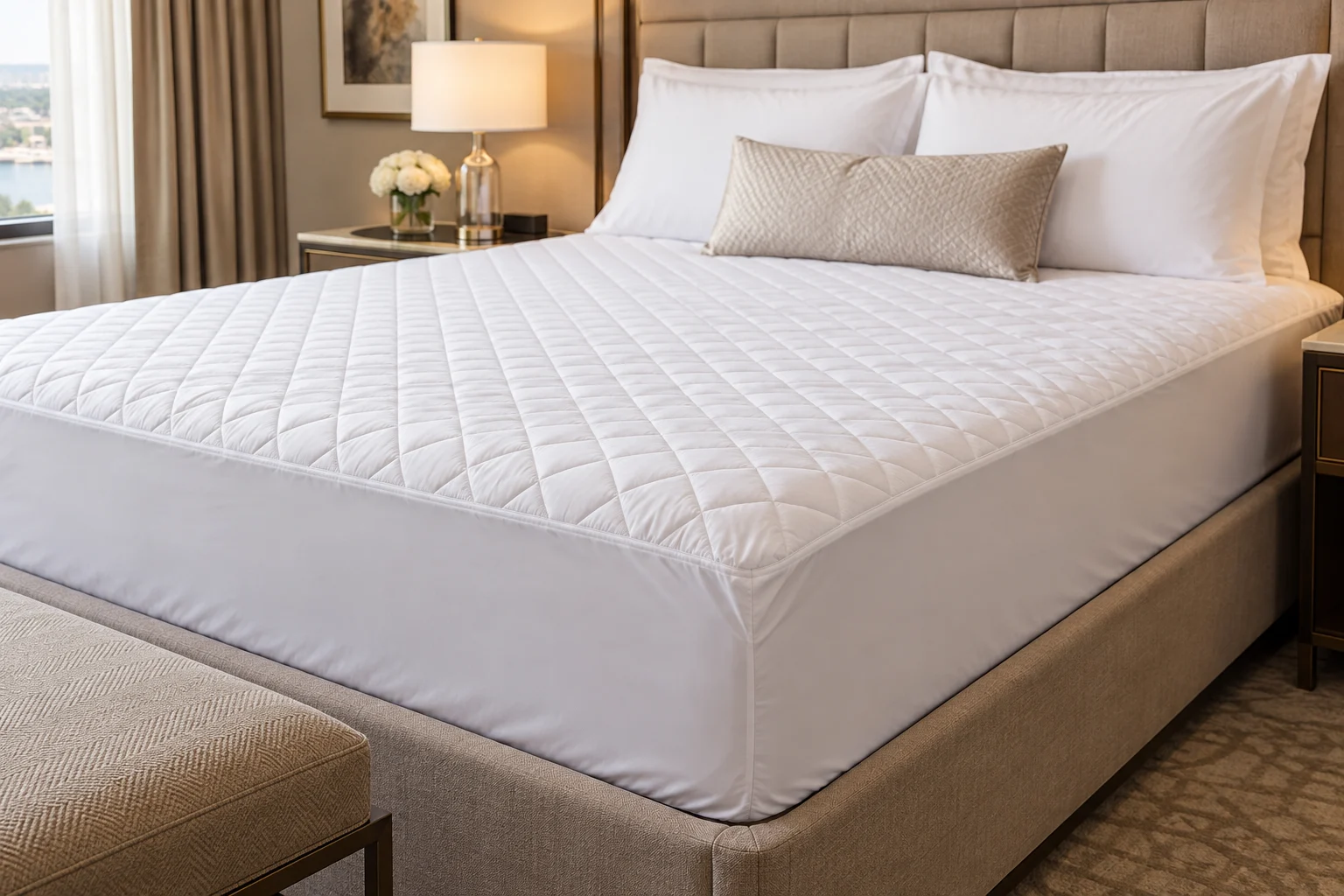
A classic quilted protector adds softness and shields the mattress from everyday wear. Corner anchor bands make removal fast, which can suit properties with frequent room turnover. A fitted protector wraps the mattress with an elastic skirt for more secure coverage and a tailored appearance.
Where liquid protection is essential, specify a quiet waterproof barrier bonded beneath a soft textile surface. The membrane should remain flexible and breathable enough to avoid a plastic feel or disruptive noise.
Confirm fit before production
Measure the finished mattress width, length and height, including any topper. Pocket depth must allow enough tolerance for housekeeping teams to fit the protector without excessive tension. An undersized skirt can lift at the corners; an oversized one may crease beneath the sheet.
Check the details that affect service life
Request wash-test evidence and review the protector as part of the complete sleep system. A deeply padded style may change fitted-sheet depth, while a waterproof model must remain compatible with the property’s laundry settings.
- Quilting pattern and stitch security for even filling distribution.
- Elastic recovery after repeated commercial washing.
- Barrier durability and resistance to cracking or delamination.
- Care temperature, drying limits and replacement procedure.